The Lab of Political Imaginaries
Exploring the paths to our political futures
At a time when inherited ideologies are losing much of their capacity to organize political life, Vivatopia starts from a simple premise: societies need imaginaries.
Political change depends not only on institutions and policies, but on the ability to make different futures thinkable and meaningful.
Vivatopia is dedicated to renewing political imagination by studying emerging visions of collective life and creating spaces where alternative futures can be debated and tested.








News From Like-Minded Centers
-
![]()
Wisdom of Crowds
Wisdom of Crowds is a debate-focused platform, running since 2019, that digs into the first principles behind political, cultural, and social issues rather than just skimming the surface.
Its stated aim isn't to win arguments or convert people to a particular view, but to understand why people—even those seen as "bad"—believe what they believe, since disagreements are legitimate and deeply felt rather than something to paper over with false consensus.
-
![]()
Persona
Persona is a sister publication to Wisdom of Crowds, launched in partnership with Aspen's Philosophy & Society Initiative. Its core mission is exploring the big philosophical questions raised by emerging technology, especially AI—chiefly, whether there is such a thing as a fixed "human nature," or whether it's fine to let AI and biotechnology re-engineer our minds and bodies as we see fit (the "transhumanist" possibility).
-
![Bergruen Institute]()
Geophilosophy
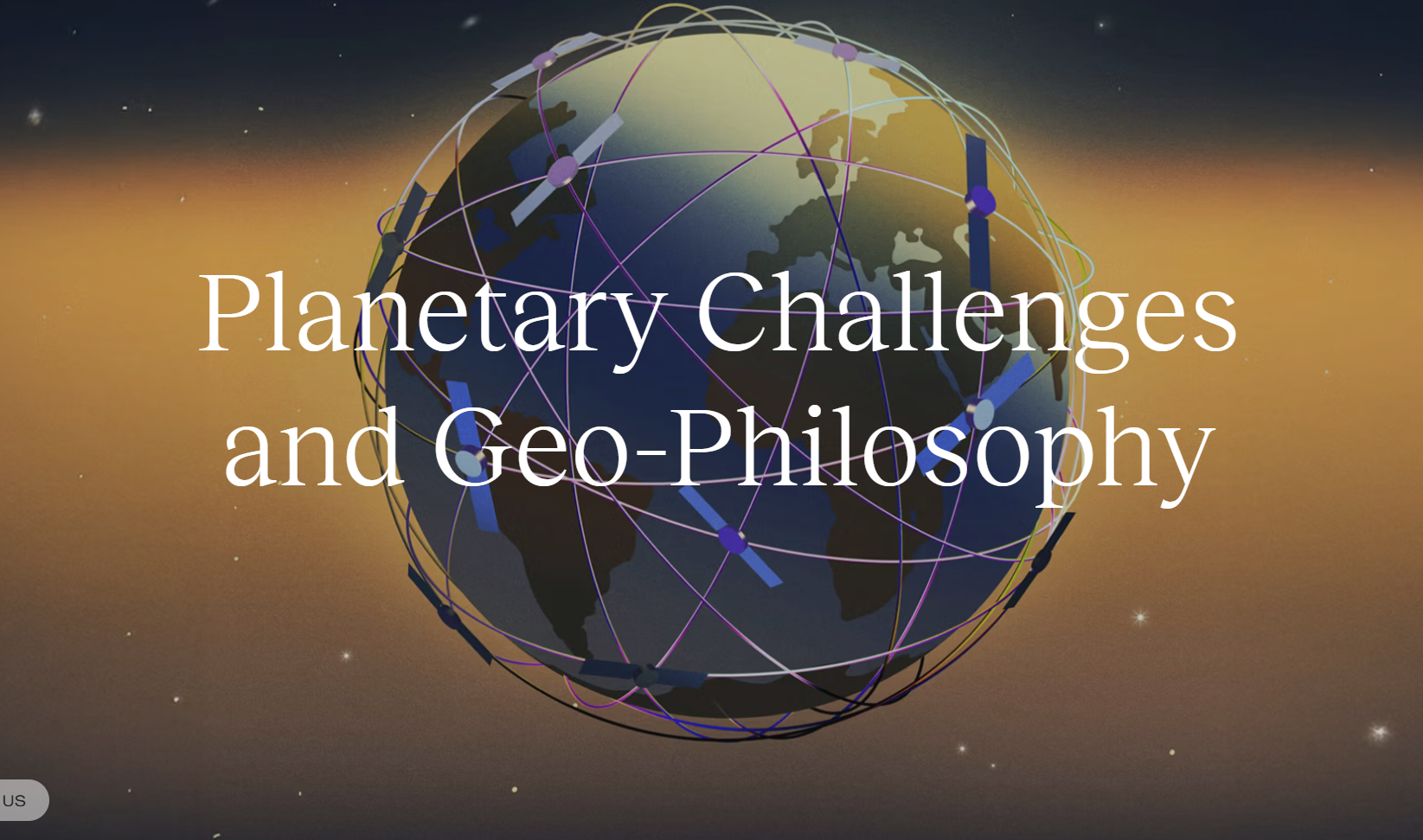
The Berggruen Institute's Planetary Challenges and Geo-Philosophy program argues that today's planetary challenges call for new thinking at a fundamental philosophical level. It draws on the Institute's presence across three continents to bring together thinkers from many traditions. "Geophilosophy" means putting philosophy back at the center of humanity's shared predicament, so that it can give meaning and direction to action. An early milestone was the book Children of a Modest Star by Nils Gilman and Jonathan Blake.
-
![]()
Future of Humanity Institute
Established in 2005, initially for a 3-year period, the Future of Humanity Institute was a multidisciplinary research group at Oxford University. During its 19-year existence, the team at FHI made a series of research contributions that helped change our conversation about the future and contributed to the creation of several new fields and paradigms. FHI was involved in the germination of a wide range of ideas including existential risk, effective altruism, longtermism, AI alignment, AI governance, global catastrophic risk, grand futures, information hazards, the unilateralist’s curse, and moral uncertainty.
-
![]()
Futuri
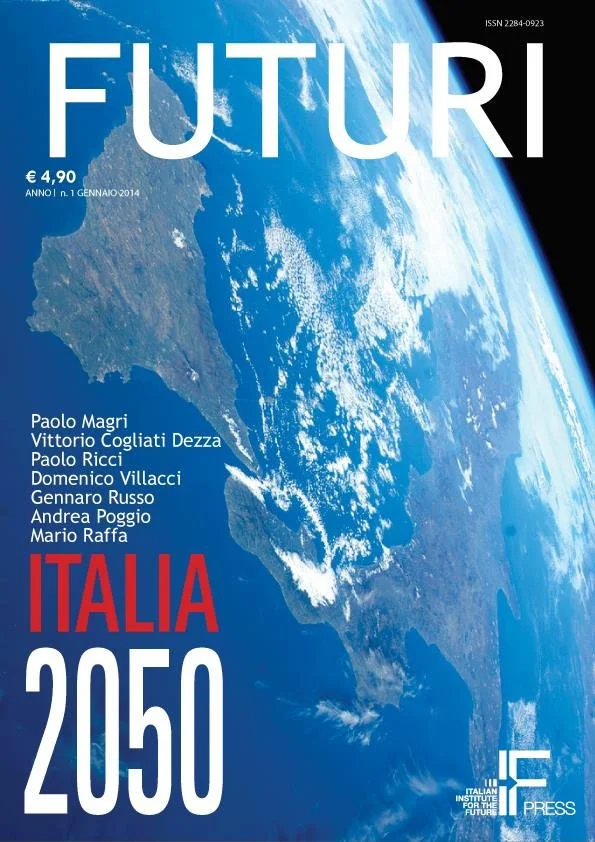
The first issue of Futuri, the quarterly magazine of the Italian Institute for the Future. The cover story is devoted to the "Italia 2050" conference, held on November 16, 2013, at the Città della Scienza in Naples, where the IIF's initiative was officially presented.
-
![]()
Emergent Political Economies
Through a five-year research theme on emergent political economies, funded by the Omidyar Network, the Santa Fe Institute is a hub for developing better theoretical frameworks and methods to understand the social, ecological, and material inequalities at the core of the modern economy.
A series of workshops and working groups explores various aspects of economic complexity, from how technologies develop to urbanization, banking credit cycles and immigration, to how the arts can offer science fresh perspectives. i
-
![]()
The Lumisphere, Rio de Janeiro, Brazil
The Lumisphere Experience, an immersive installation of 360° projections, surround sound, and AI-guided exercises, drew 50,000+ visits at Rio's Museu do Amanhã from October to December 2025. The Institute for the Future measured its impact on "urgent optimism," the belief that people can shape a better future, across four dimensions: mental flexibility, realistic hope, future power, and openness to possibility.
-
![]()
The Future of Work and Workers
What will be the most consequential changes in the world of work and workers, and what anxieties and possibilities will they produce?
With support from The Rockefeller Foundation, The Center for Advanced Study in the Behavioral Sciences at Stanford University asked this of business and union leaders, social scientists, technology visionaries, activists, and journalists around the world. The project, in collaboration with Pacific Standard, is called “The Future of Work and Workers.”
-
![]()
Defensive AI Agents Magnify Cyber Risks
New research from AI Now demonstrates a critical attack vector in popular AI agents, built by Anthropic and OpenAI, when used for defensive purposes that actually turn the agent against its user.
-
![]()
Scenarios For Greenland
Renewed U.S. talk of taking control of Greenland, a semi-autonomous territory of the Danish Realm, has made Arctic geopolitical rivalry an immediate issue, straining transatlantic ties and questioning the rules-based order. With no resolution in sight, the Copenhagen Institute for Futures Studies has developed four scenarios for how the dispute could end and what each would mean.